Omano Compound & Stereo Microscopes for STEM Classrooms and Industrial Inspection
Every budget scope prints 1000x on the box; the 1.25 N.A Abbe condenser that makes 1000x usable is the number Omano prints instead, beside a 4.57-star average from 1,823 verified buyer reviews. One detail the listings bury: that condenser rides on the student compound models, not on the kids kit.
You are choosing between a used name-brand body with unknown hours on it and a new scope you can register a warranty against. Load a stained onion-root slide, drop the 40x objective, and both reach the same mitosis phases. What only one of them gives you: spring travel in the 40x and 100x barrels so a bumped knob costs a smudge instead of a cracked coverslip, and a phone line that still answers in year three.
Focus a stained slide at 1000x without lifting your eye from the eyepiece, using coaxial coarse and fine knobs stacked on one axis.
Register the Lifetime Limited Warranty the day your scope lands and keep direct phone support long after the return window closes.
Charge the cordless LED for 30 minutes and run a full day of classroom slide work with no cord across the aisle.
Lifetime Limited WarrantyStated on most microscope models
Direct phone supportReplacement parts sourced by model number
4.57★ averageAcross 1,823 verified buyer reviews
Our microscopes and field optics
Compound scopes for slide work at 1000x, zoom stereo heads on boom stands for opaque parts, plus a birding sub-line that is not a microscope.
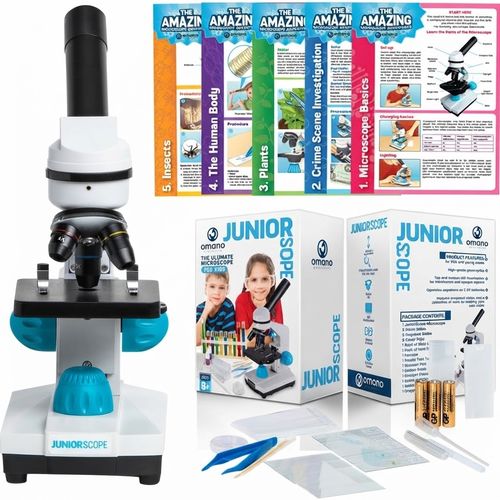
Omano Juniorscope Microscope Kit for Kids 8+
★★★★★ 4.6 (1,597 verified reviews)
Hand an 8-year-old a dropper, a petri dish, and a jar of pond water, and the 400x objective turns a grey drop into rotifers spinning across the field. Glass objectives at 40x, 100x, and 400x do the resolving, so detail holds where plastic lenses go soft, and the battery LED means a picnic table works as a lab bench with no outlet nearby. Where a toy scope prints a huge magnification number on the carton and delivers a blur, this one publishes its objective set and a 3-lb body built to survive being carried by the eyepiece. Forceps, dropper, test tube, slides, and five guided experiments ship in the case, under the Lifetime Limited Warranty. Kids tier; check today's price.
40x, 100x, and 400x on glass objectives: pond rotifers resolve instead of blurring
Battery LED runs the lamp off-grid, so a picnic table works as a lab bench
Lifetime Limited Warranty registers the day the kit arrives
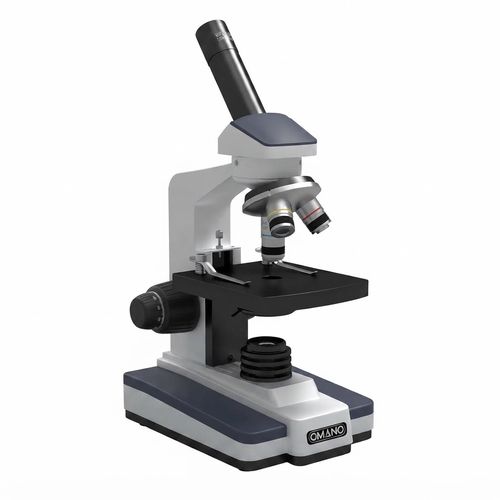
Omano Discovery Compound Microscope Set, 40x to 400x
★★★★★ 4.9 (44 verified reviews)
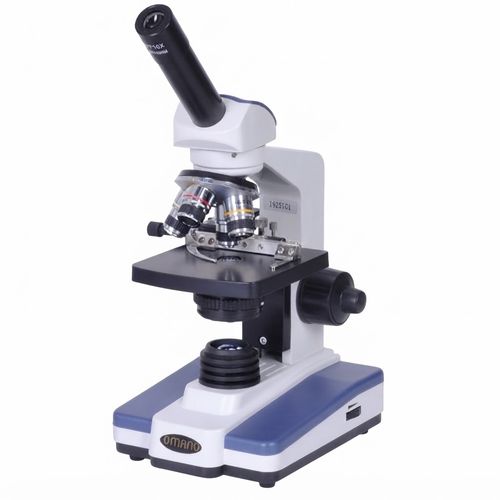
Carry it one-handed between lab benches at 1.9 lbs and the metal frame will not rack the stage out of alignment on the way. DIN-standard achromatic objectives thread into a nosepiece any DIN objective fits, and the coaxial coarse and fine knobs share one axis, so focusing happens without your eye leaving the eyepiece. Where a plastic-bodied kit flexes under a thumb and drifts out of focus, this metal body holds a 400x field through a full lab period. Buyers rate it 4.9 stars across 44 verified reviews, and the rack-and-pinion focus keeps its feel after a semester of daily use. Entry-adult tier; check today's price.
1.9 lbs of metal body moves bench to bench without racking the stage
Coaxial coarse and fine knobs stack on one axis, so focus happens without looking up
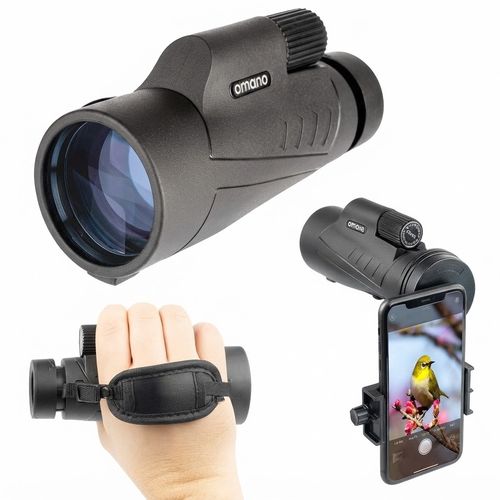
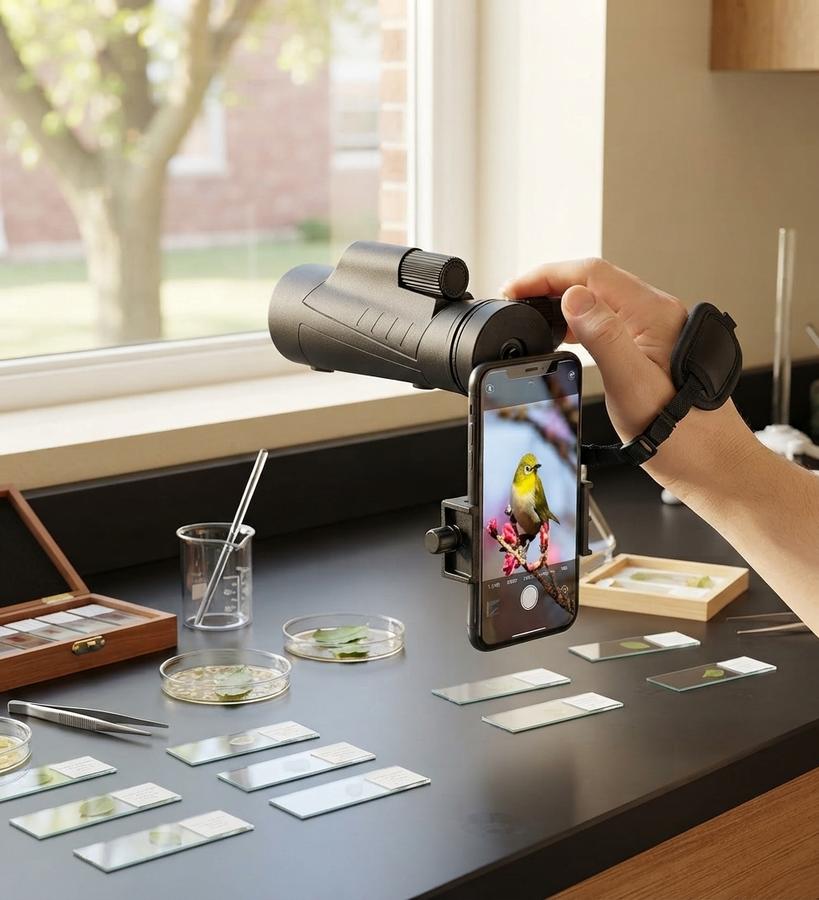
Pull it from a jacket pocket at first light and 12x magnification with 305 feet of field puts a warbler in frame before it drops off the branch. Twist-up eyecups set eye relief for glasses in one turn, and multi-coated glass keeps the image bright while the light is still coming up. At 500 grams it rides in one hand for an hour of walking without the wrist fatigue a full binocular brings. Unlike the compound and stereo microscopes, this is field optics rather than lab equipment: no stage, no slides, no transmitted light. Waterproof and fog-proof construction handles a wet morning, and the bundled smartphone adapter turns a sighting into a record shot. Check today's price.
12x with 305 feet of field frames a warbler before it moves off the branch
Twist-up eyecups set eye relief for glasses in a single turn
Birding optics, not a microscope: no stage, no slides
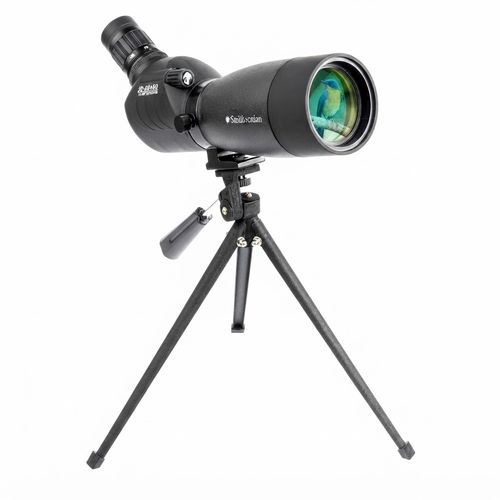
Omano Smithsonian 20-60x60 Spotting Scope with Tripod
★★★★☆ 3.7 (37 verified reviews)
Set the tripod on a levee at first light and the 20-60x zoom pulls a 68-to-131-foot span at 1,000 yards into detail no pocket monocular reaches. The zoom collar climbs magnification while the fine-focus control holds the image, and nitrogen purging with o-ring seals keeps the internals dry through a fog-in or a rain squall. Unlike a compound microscope, this reads distant subjects rather than slides; it belongs to the birding sub-line beside the monocular. Tripod, protective case, phone adapter, and a Smithsonian bird guide ship with it at 900 grams, light enough for a shoulder walk to the blind. Check today's price.
20-60x zoom reads a 68-to-131-foot span at 1,000 yards
Nitrogen purge and o-ring seals keep fog out of the barrel
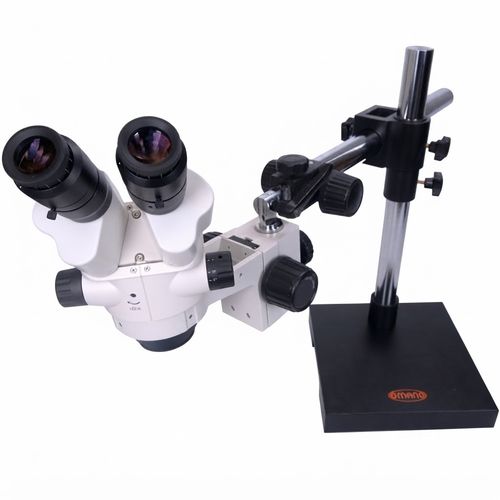
Omano OM2300S-GX4 Zoom Stereo Microscope, Single-Arm Boom Stand
★★★★★ 5 (4 verified reviews)
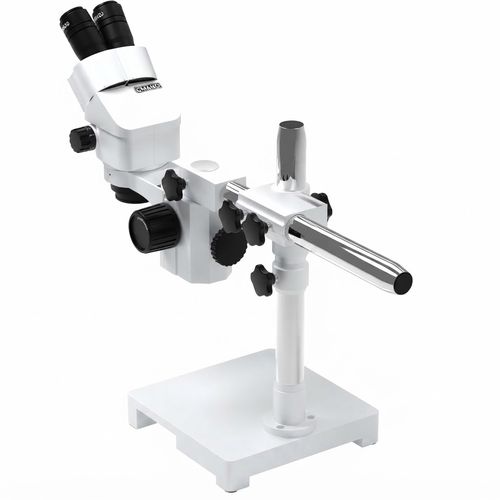
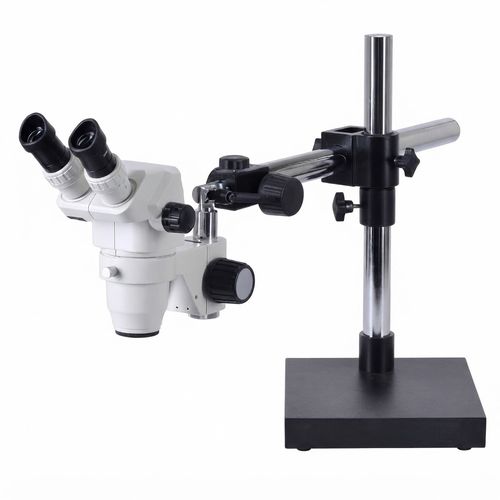
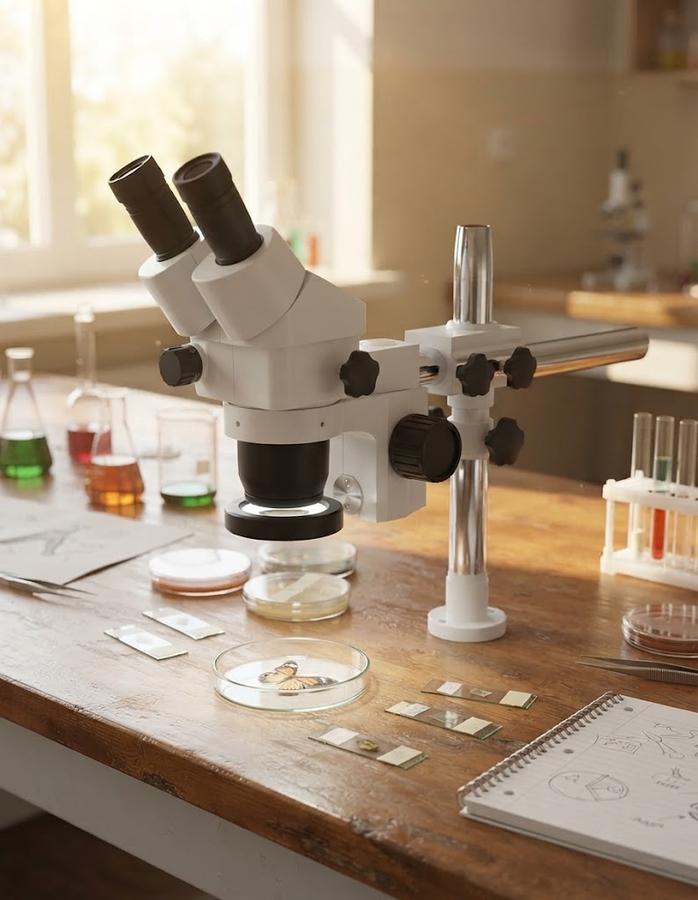
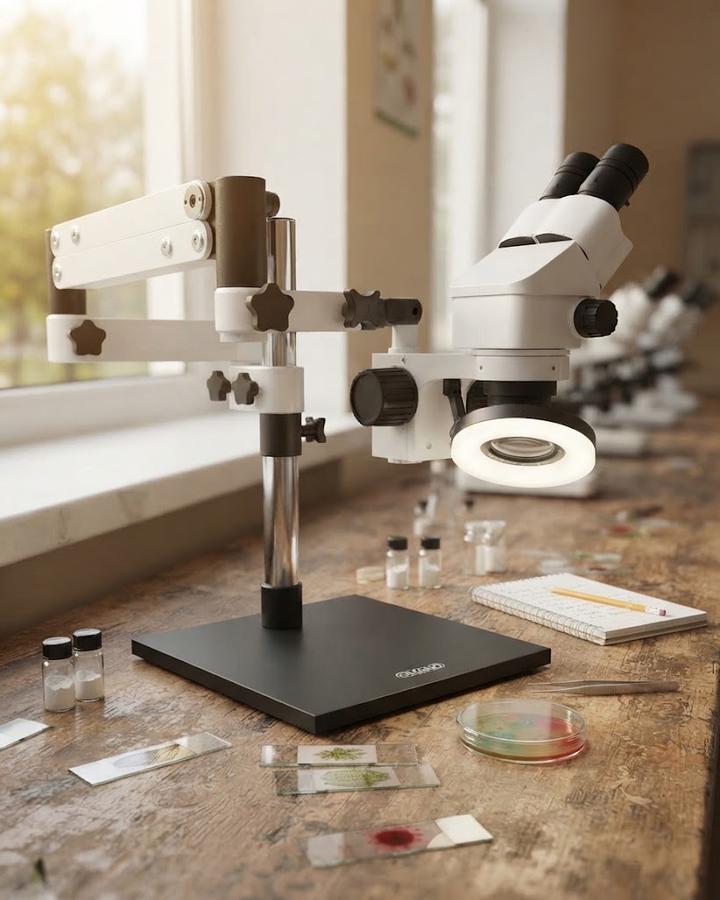
Clamp the single-arm boom to a bench edge, swing the 7x-45x zoom head over a populated board, and both hands stay free underneath the optics. The 0.5x Barlow lens opens working distance to 8 inches, which is room enough for an iron and tweezers at the same time, and the fluorescent ring light throws even illumination instead of a shadow behind a tall capacitor. Where a pillar-stand stereo scope makes you slide the work around a fixed base, the boom moves the head to the work instead. Wide-field eyepieces and the ring light ship in the crate, backed by lifetime coverage and a direct phone line. Industrial tier; check today's price.
7x-45x zoom over a populated board with both hands working underneath
0.5x Barlow opens 8 inches of working distance for iron and tweezers
Lifetime coverage with a direct phone line for parts
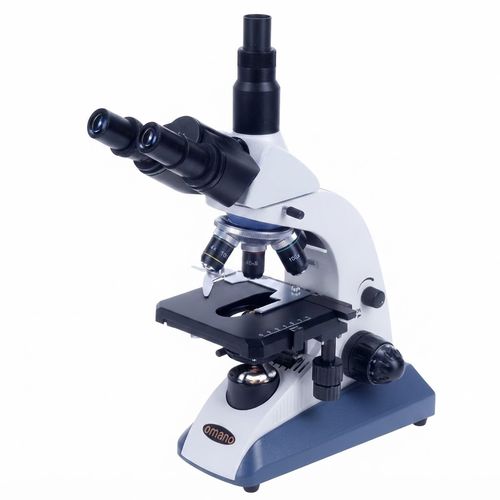
Omano OM36-TL Trinocular Student Microscope, 40x to 1000x
★★★★★ 5 (1 verified reviews)
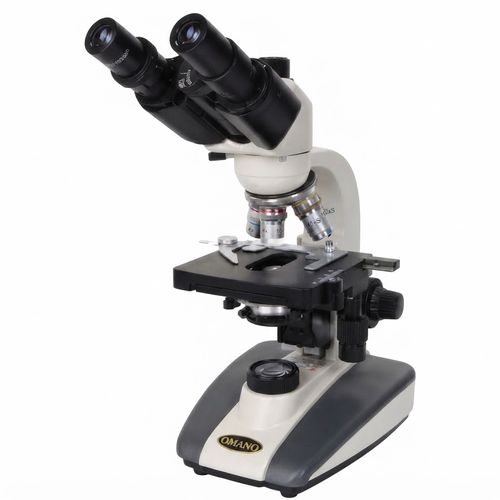
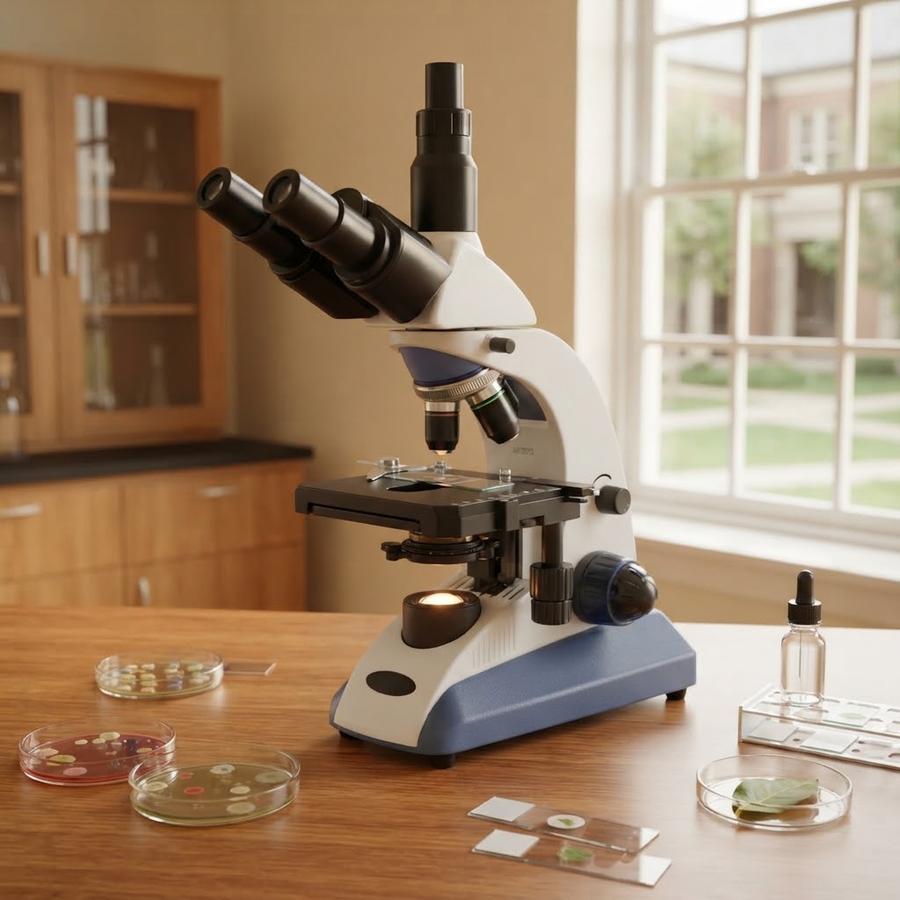
Clamp a phone adapter to the photo port before class and thirty students watch anaphase on the projector while you keep both oculars for focus. Four parcentered achromatic objectives, 4x, 10x, spring-loaded 40x, and oil-immersion 100x, hold their center as you climb, and the Abbe 1.25 N.A condenser with an iris diaphragm feeds the light cone a 1000x field needs. Where a monocular scope means passing the instrument down a bench row, this trinocular head sends the image out to a screen. The Seidentopf head sits at a 45-degree incline and rotates a full turn, over a double-layered mechanical stage that walks slides in fractions. Student tier; check today's price.
Trinocular photo port casts the field to a projector while both oculars stay in use
Abbe 1.25 N.A condenser with iris diaphragm keeps a 1000x oil field bright
Four parcentered objectives hold center where cheaper nosepieces drift
Omano Compound Binocular Student Microscope, 40x to 1000x
★★★★☆ 4 (1 verified reviews)
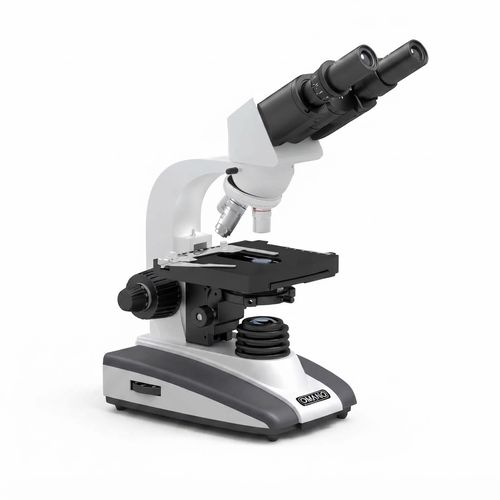
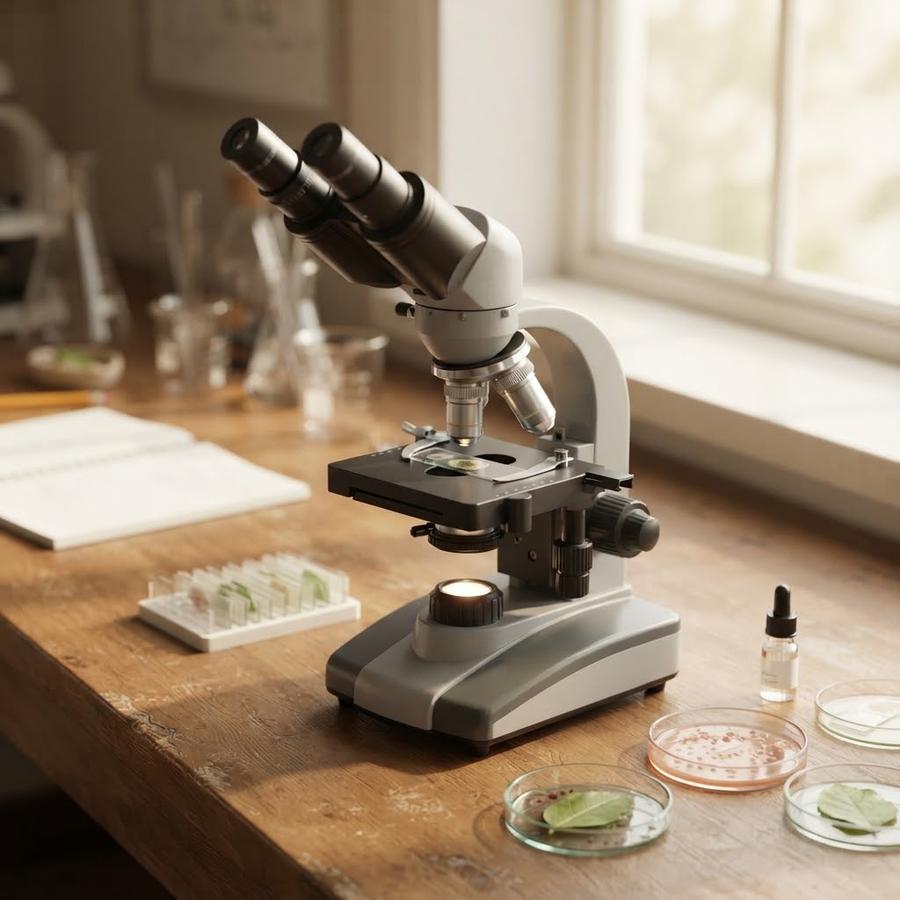
Run a two-hour session with both eyes open at 400x and the strain that builds behind one eye on a monocular never arrives. Interpupillary spacing adjusts from 55 to 75 mm and each ocular carries its own diopter, so a shared classroom scope resets to the next student in seconds rather than minutes. Where a plastic-bodied kit flexes under thumb pressure, this all-metal frame keeps a 1000x field from drifting between focus checks. Four achromatic objectives, spring-loaded at 40x and 100x, sit above a professional condenser with iris diaphragm, and the rechargeable LED runs cordless through a field session. Student tier; check today's price.
Both oculars carry diopters, so a shared scope resets between students in seconds
Rechargeable LED runs cordless through a full field session
All-metal frame holds a 1000x field where plastic bodies flex
Set a stained blood smear on the mechanical stage, turn the X-Y controls a hair, and the field moves in increments your fingers cannot manage by hand at 1000x. Coaxial coarse and fine knobs share one axis so focusing happens without looking up, and the spring-loaded 40x and 100x barrels retract on contact instead of grinding into the coverslip. Where a lightweight kit rocks the moment you touch the stage, this all-metal body absorbs the nudge and holds focus. Four glass objectives run 40x through 1000x oil immersion beneath a professional Abbe condenser, with the illumination corded for steady output. Full-metal student tier; check today's price.
Mechanical stage X-Y controls walk a blood smear in fractions at 1000x
Spring-loaded 40x and 100x barrels retract on contact instead of cracking a slide
All-metal body absorbs a stage nudge that rocks lighter kits
Photograph a full field edge to edge and the semi-plan objectives keep the corners flat where standard achromats bow and soften. A trinocular photo port feeds a camera or phone adapter without borrowing an eyepiece, and the pull-out lamp housing lets you swap a halogen bulb without dismantling the base or re-centering the condenser. Unlike vintage non-plan optics, which curve the field at high power, semi-plan glass holds enough of the frame for a usable classroom image. Introduced in 2009, it runs four semi-plan objectives to 1000x oil immersion under an Abbe condenser with iris diaphragm, on a double-layered mechanical stage, and carries the Lifetime Limited Warranty. Check today's price.
Semi-plan objectives keep corners flat for edge-to-edge classroom photos
Pull-out lamp housing swaps a halogen bulb without dismantling the base
Lifetime Limited Warranty on a published-spec build
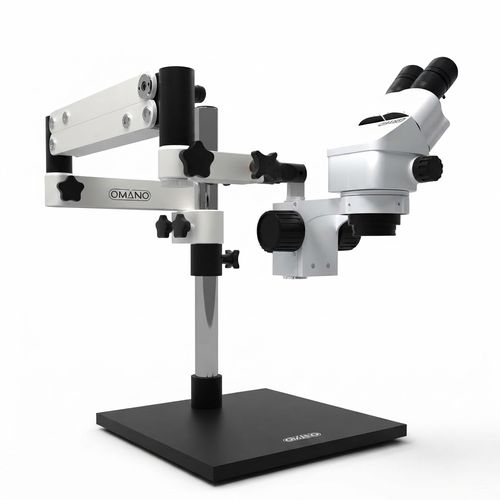
Omano OM2300S-V7 Zoom Stereo Microscope, Articulating Boom Stand
★★★★★ 4.6 (3 verified reviews)
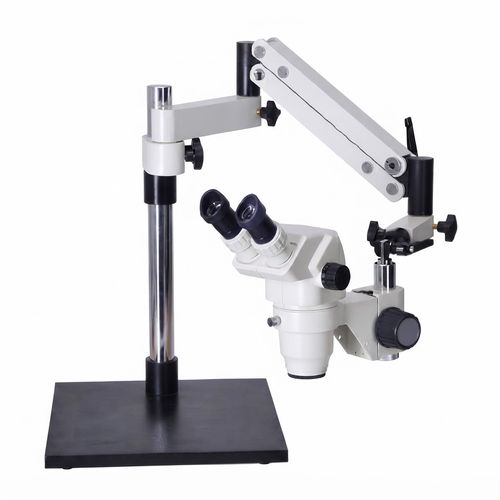
Push the head aside to place a board, let go, and the spring-powered articulating arm holds the new position with no knob to retighten. The articulating joint moves the optics through the arc your wrist already makes, and the 80-LED ring light fills the shadow a bench lamp leaves behind a heat sink. Where a fixed single-arm stand asks you to slide the work into place, this arm reaches the work where it sits. The center arm lifts out when you need extra clearance under the optics, and the 7x-45x zoom holds its focal plane across the range. Buyers rate it 4.6 stars, with lifetime coverage and phone support behind it. Industrial tier; check today's price.
Spring-powered arm holds a new position without retightening a knob
80-LED ring light fills the shadow behind a tall heat sink
Lifetime coverage with direct phone support for parts
Omano OM2300S-V10 Zoom Stereo Microscope, Single-Arm Boom Stand
Nudge a board along the bench and the 4-inch horizontal extension bar follows it, so the boom base stays clamped exactly where you set it up. The 7x-45x zoom head holds parfocal across the range, which means a joint you found at 45x is still in focus when you pull back to 7x for context on the board. Where the older single-arm stand needs the whole boom repositioned for a small move, this one slides along the bar in a second. Wide-field eyepieces and an LED ring light ship with it, and lifetime coverage with phone support stands behind the build. Industrial tier; check today's price.
4-inch extension bar tracks the work without moving the clamped base
7x-45x zoom stays parfocal, so focus holds from 45x back to 7x
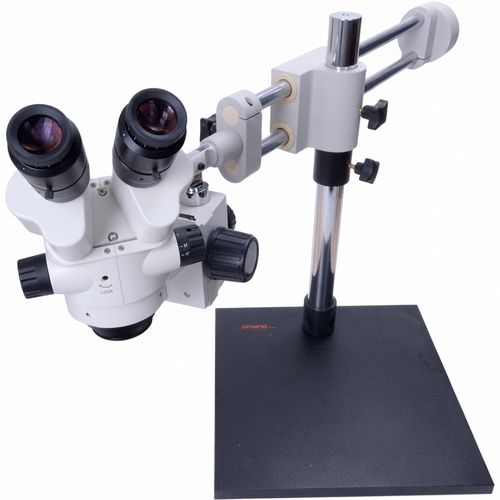
Omano OM2300S-V6 Zoom Stereo Microscope, Dual-Arm Boom Stand
Lean into a stubborn joint with the head hanging out over the bench and nothing moves, because the dual-arm stand counterbalances the full weight of the optics. A counterweight on the second arm cancels that load instead of fighting it with friction, so the head returns to the same height every time you swing it back over the work. Where a light single-arm stand walks under a heavy head, this one stays planted and asks for a bench rated to hold it. Wide-field eyepieces with rubber eyecups, an LED ring light, and a hanging bar ship in the crate, under lifetime coverage with phone support. Industrial tier; check today's price.
The head holds position while you lean into a joint mid-rework
Second-arm counterweight cancels the load instead of relying on friction
Omano OM99-V10 Premium Zoom Stereo Microscope, Single-Arm Stand
Zoom from 6.5x to 45x on a fine-pitch package and the six-prism optical train keeps both barrels parfocal instead of forcing a refocus at every stop. Super wide-field eyepieces open the visible field wider than standard glass, and dual diopters set each eye once at the start of a shift. Where a budget zoom head shifts its focal plane as you change power, this one holds the plane through the whole range, which is what makes a long inspection session bearable. A premium single-arm stand with a 4-inch extension bar and an LED ring light complete it, under lifetime coverage with phone support. Flagship industrial tier; check today's price.
6.5x-45x zoom holds its focal plane through the range on a fine-pitch package
Six-prism train and super wide-field eyepieces widen the field without softening edges
Omano OM99-V7 Premium Zoom Stereo Microscope, Articulating Stand
Swing the premium zoom head off the bench, load a chassis, and bring it back to the same focal plane without touching a knob. The articulating arm pivots in two places, so the optics reach into a chassis a fixed boom cannot clear, and the removable center arm buys stability back on the days you do not need that reach. Where a single-arm stand traces one fixed arc, this pair reaches around an obstruction and holds. Super wide-field eyepieces with rubber eyecups and an 80-LED ring light ship with the 6.5x-45x head, under lifetime coverage with phone support. Flagship industrial tier; check today's price.
Articulating arm reaches into a chassis a fixed boom cannot clear
Removable center arm trades reach for stability when reach is not needed
Why Buyers Pick a New Scope Over a Used Name-Brand Body
Spec sheets, warranty terms, and 1,823 verified buyer reviews stand behind the reasons buyers give for choosing new glass.
Rework a Circuit Board With Tweezers Still in Hand
Measured at 8 inches of working distance with the 0.5x Barlow lens, the 7x-45x zoom stereo head clears your fingers and the iron underneath it.
Swap In a Better Objective Without Buying a New Scope
DIN-standard threads let an objective from another maker screw into the nosepiece and hold its parfocal distance, so year three brings a sharper 40x.
Know the Hours on Your Scope, Because There Are None
A used AO or Olympus body arrives with unknown lamp hours and coverage that expired under a previous owner. A new student compound scope starts at zero hours on day one, with support attached.
Stop Gambling on a Stranger's Old Microscope
End the midnight scroll through secondhand posts with three blurry photos and no service record. Read the 1,597 buyer reviews behind the kids kit, and the published objective specs, before you order instead.
Watch an 8-Year-Old Prep Their First Slide
Picture a Saturday morning: pond water on a glass slide at 400x, and a rotifer crossing the field. Forceps, dropper, and petri dish ship in the kit.
The Detail First-Time Buyers Miss on the 40x Objective
Notice how the 40x and 100x barrels give under a fingertip. That spring travel absorbs a coarse-focus bump that would otherwise crack the coverslip.
From Box to First Focused Slide
Unboxing to a focused 400x field runs through mounting a slide, picking an objective, coaxial focus, and light.
1
Clip the Slide
Slide a prepared onion-root specimen under the stage clips and center it over the light port.
2
Start at 4x
Find the specimen at 4x, then climb through 10x and 40x. The four objectives stay parcentered, so nothing wanders off frame.
3
Focus Coaxially
Turn the stacked coarse and fine knobs without lifting your eye from the eyepiece, then sharpen at 40x.
4
Set the Light
Center the Abbe condenser, open the iris diaphragm a third of a turn, and charge the cordless LED for 30 minutes before a field trip.
The Scenarios These Optics Were Built Around
A stained slide at 1000x, a live rework bench, a class of thirty waiting, and a warranty call in year three.
See Onion Root Mitosis in Full Contrast at 1000x
Oil-immersion work at 1000x fails on light, not on lenses: too little cone angle and the field greys out. The 1.25 N.A Abbe condenser with its iris diaphragm concentrates that cone, so anaphase chromosomes separate cleanly against the cytoplasm instead of washing into it. Close the iris a third of a turn for contrast, open it back for brightness.
Drop immersion oil on the coverslip, swing in the 100x barrel, and the image holds because the condenser feeds that objective its full light cone.
Where a fixed-aperture disc scope greys out past 400x, the iris diaphragm trims stray light and keeps chromosome edges defined.
Center the condenser once at the start of a lab period and every objective from 4x through 100x stays evenly lit for the next two hours.
Inspect a Circuit Board Without the Stand Drifting
Boom stands built for a 55-lb head stop drifting mid-pass, and drift is what ruins a rework job on a populated board. The dual-arm stand carries that load on a counterweighted arm, so the optics hold the angle you set through the twenty minutes a stubborn joint takes. Across a dozen passes down that board, nothing sags between the moment you find the fault and the moment the iron reaches it.
Swing the arm across a full-size motherboard, let go, and the counterweighted head holds that angle for the rest of the session.
The 80-LED ring light kills the shadow a bench lamp throws behind a tall capacitor, so solder fillets read at a glance.
Where a pillar-stand stereo scope makes you slide the work around a fixed base, the boom arm moves instead of the board.
Thirty students cannot queue at a single eyepiece inside a 50-minute lab period, which is what the OM157-T's trinocular photo port solves. The head splits the light path to a dedicated camera tube, so a phone adapter streams the field to a screen while both oculars stay free for focus. The eyepieces never leave their tubes, so the student who framed anaphase keeps that field through all three lab periods that afternoon.
Clamp a phone adapter to the photo port before class, cast to the projector, and thirty students watch anaphase at the same second.
Both oculars stay usable while the camera records a 10-minute time-lapse, because the head splits light rather than borrowing an eyepiece tube.
Where a monocular scope means passing one instrument down a bench row for the last twenty minutes of class, the trinocular sends the image out instead.
A lifetime warranty is worth what its phone line is worth, and owners have used this one to replace a failed illumination wire and a clouded 40x objective at no charge. The call routes to the people who build and stock the line rather than to a message queue. Register the model number the week the box lands and that record is waiting when you dial.
Register the model number the week the box lands and the record is on file when you call three years later.
Check the warranty line on the model page before you order, because coverage is stated per product rather than applied to everything.
Where a secondhand scope leaves you hunting an obsolete bulb yourself, one call here reaches the people who stock the part.
Charge time, numerical aperture, and boom-stand load rating: the specs that decide a purchase and rarely reach a buying guide.
30 min
Charge the cordless LED for 30 minutes at lunch and it runs a full afternoon of slide work, with no cord stretched across the aisle for a student to catch.
Buying guides list LED illumination as a checkbox. Almost none put a charge time on it.
manufacturer spec4.57★ / 1,823 reviews
Check the review count before you trust the star rating: 1,823 verified buyers hold this line at a 4.57-star average across years of classroom and field use.
Generic guides line up spec sheets side by side and never tell you how many buyers kept the scope past the first semester.
1,823 verified buyer reviews1.25 N.A / DIN standard
Thread a DIN-standard objective into the nosepiece and the Abbe condenser still feeds it a full light cone, which is what keeps a 1000x field sharp instead of grey.
Numerical aperture and thread standards turn up in only a handful of guides. Most stop at the words Abbe condenser.
manufacturer spec55 lbs / 8 in
Counterbalanced to 55 lbs of microscope head, the dual-arm boom stand holds position mid-inspection. Add the 0.5x Barlow lens and working distance stretches to 8 inches for a taller board.
Boom-stand load rating and working distance rarely make it into comparison tables.
manufacturer spec1.9 lbs
Carry the all-metal Discovery microscope between benches in one hand at 1.9 lbs, and the metal frame will not rack the stage out of alignment on the way.
Buying guides check off metal construction and skip the number you feel when you carry the scope down a bench row one-handed.
manufacturer spec1998 (28 yrs)
Trace the same optical line back to 1998, 28 years of building compound and stereo scopes rather than relabeling whatever a supplier shipped this season.
Comparison tables stack this season's spec sheets and skip which brands were still stamping the same part numbers a decade earlier.
manufacturer record (Microscope.com, est. 1998)40x/100x spring-loaded
Bump the coarse focus at 40x and the spring-loaded barrel retracts instead of grinding into the slide. No cracked coverslip, no lost specimen, no restart.
Objective sets get quantified everywhere. Breakage protection on the barrel almost never does.
manufacturer spec
The House Brand Behind Microscope.com
Omano has been the house optics line of Microscope.com, run by The Microscope Store, LLC since 1998, and you buy that same name on an 8-year-old's 400x kit or on an OM99 rework-bench zoom head. Your real comparison is a used AO or Olympus body on a secondhand posting, and one asymmetry there decides it. Scroll that posting twice and the lamp hours are still unlisted, while the coverage expired under its previous owner.
A first-year biology student put a stained onion-root tip under the all-metal OM118 Discovery scope at 400x and documented prophase through telophase on slides prepped in class that morning. The department's donated scope reached the same phases on better glass, then sat unused for a term because nobody on staff could source its bulb.
Continuity is not decoration here: the 40x objective that clouds in 2031 still has a part number someone answers to. Register that lifetime warranty when your scope arrives and the phone line stays open long past any return window.
Walk a marsh trail at dawn with the 500-gram Smithsonian 12x50 monocular in your pocket, and its 305-foot field of view frames a whole reed bank. Unlike the compound and stereo scopes, that monocular and the 20-60x60 spotting scope are birding optics, built for distance and weather rather than slide work.
Classroom, home desk, and rework bench: buyers describe the specs that changed how they work.
★★★★★Verified Purchase
My daughter turned eight in March and this was the gift that stuck. The three magnification steps are the part that matters: she finds a pond drop at 40x and then walks it up to 400x herself without help. It arrived with forceps, a dropper, prepared slides and blank ones, so the first Saturday was already a full experiment instead of a shopping list. The body is plastic and it has been knocked off a chair once with no damage to the optics.
Dana R.
Omano Juniorscope Microscope Kit for Kids 8+
★★★★★Verified Purchase
I teach an intro biology section and bought this one to carry between two rooms. Under two pounds means it goes under an arm with a slide box in the other hand, and the stage has never come out of alignment on the walk. The DIN threading sold me: I already own a spare 40x objective from an older scope and it threaded straight in and held focus. Coaxial knobs are on the correct axis so students stop lifting their heads mid-focus.
Marcus T.
Omano Discovery Compound Microscope Set, 40x to 400x
★★★★☆Verified Purchase
Pocket optic for early walks, and it does what it says. Twelve power with that field of view finds a warbler in the canopy faster than my binocular does, and the twist-up eyecups sit right with glasses on. The phone adapter is fiddly the first two times and then becomes routine. Worth being clear with yourself before ordering: this is a birding tool, not a lab instrument, so nothing about it relates to slides.
Priya N.
Omano Smithsonian 12x50 Monocular Telescope
★★★★★Verified Purchase
Rework bench purchase. I clamped the single-arm boom to the edge of the bench and the zoom head swings over a populated board with both hands free underneath. The Barlow lens opens up enough room that an iron and tweezers fit under the optics at the same time, which was the whole reason I moved off a pillar stand. The ring light removes the shadow a bench lamp throws behind tall capacitors.
Owen S.
Omano OM2300S-GX4 Zoom Stereo Microscope, Single-Arm Boom Stand
★★★★★Verified Purchase
Trinocular port was the deciding feature for a shared classroom. A phone adapter goes on before the period starts, the field casts to the projector, and both eyepieces stay free so I can keep focusing while thirty students watch. Four objectives stay centered climbing from 4x through 100x oil. The condenser with a working iris is what keeps the 1000x field readable rather than washed out.
Helen K.
Omano OM36-TL Trinocular Student Microscope, 40x to 1000x
★★★★☆Verified Purchase
Two hours of slide work with both eyes open and none of the ache that used to build behind one eye on my old monocular. Interpupillary adjustment and separate diopters mean a shared scope resets for the next person in seconds. The metal frame does not flex when someone leans on the stage. My one gripe is that the manual is thin, so the first evening involved more trial and error than it should have.
Jerome A.
Omano Compound Binocular Student Microscope, 40x to 1000x
★★★★☆Verified Purchase
Bought it for blood smears at home after finishing a lab course. The mechanical stage is the difference: X-Y knobs walk the slide in fractions instead of the overshoot you get pushing glass with a finger at 1000x. Spring-loaded 40x and 100x barrels have already saved a slide when I drove the coarse focus down out of habit. Illumination is corded, which I prefer for steady output at a desk.
The articulating arm earns its keep. Push the head aside to place a board, let it go, and it holds the new position without touching a knob, which a fixed boom will not do. The eighty-LED ring fills in behind a heat sink where my old lamp left a shadow. I called support about a wobbly eyecup and a replacement went out on the phone call, no forms.
Ted W.
Omano OM2300S-V7 Zoom Stereo Microscope, Articulating Boom Stand
★★★★★Verified Purchase
Semi-plan glass was the reason I paid up, and it shows the moment you photograph a full field: corners stay in focus where my older achromatic set bowed and softened. The pull-out lamp housing means a halogen swap takes minutes and does not disturb the condenser centering. It is a heavier instrument than it looks in photos, so give it a permanent spot rather than planning to move it around.
Dual-arm stand, and yes, it genuinely outweighs the head it carries. That is the point. I lean into a stubborn joint with the optics hanging out over the bench and nothing creeps. Check your bench before ordering, because this is not something a folding table will hold. Assembly took me about forty minutes with the counterweight balanced before the arm went out.
Curtis B.
Omano OM2300S-V6 Zoom Stereo Microscope, Dual-Arm Boom Stand
Against a Budget Import and a Used Name-Brand Body
Warranty, glass, a light path built for 1000x, and 1,823 verified reviews: where a new scope diverges from an AmScope-tier import.
Criterion
Omano
Typical Budget Import
Used Name-Brand Scope (Secondary Market)
Warranty coverage
Lifetime Limited Warranty with direct phone support on most models
Fixed short term, email only
None; original coverage expired with a prior owner
Objective lenses
Achromatic glass with DIN-standard threading; semi-plan on the trinocular student model
Plastic or uncoated optics on entry kits
Good glass, unknown wear, possible scoring
Condenser
Abbe 1.25 N.A with iris diaphragm on the student compound models
Fixed-aperture disc, or no condenser at all
Varies by decade; often excellent, often uncentered
Illumination
Cordless LED on a 30-minute charge, or halogen with a removable lamp housing
One fixed bulb, no brightness control
Original incandescent; bulbs increasingly hard to source
Verified buyer reviews
4.57-star average across 1,823 verified reviews
Mixed and inconsistent across relabeled sellers
No manufacturer-backed review trail
Support model
Direct phone support with no-charge replacement parts
Email form, or none
No manufacturer support on discontinued lines
Day 1 to Year Three
Unboxing to the first replacement part: what happens across day one, week one, and the first 12 months on your desk.
Day 1
Day 1, on the kitchen table: lift the scope out, register the Lifetime Limited Warranty, then run the coarse focus and the lamp while the retailer's return window is still open.
Week 1
Week 1: prep three slides of your own, onion skin, cheek cells, pond water, and learn that 4x finds a specimen faster than hunting for it at 40x.
Month 1
Month 1: the 40x objective becomes your working lens, the fine knob does the focusing, and the coarse knob stays parked where you left it.
Year 1 and beyond
Year 1 and beyond: read your model number off the stand and describe the clouded eyepiece or the failed lamp wire. The replacement part ships without a second purchase.
Ready for Day 1? Compare the student compound scopes before you order.
What Actually Goes Wrong, Before and After the Purchase
Empty magnification claims, unknown lamp hours, a grey field at 1000x, and a cracked coverslip: what goes wrong, and what stops it.
Paying for 2000x That Shows You Nothing
Toss the box that prints 2000x in red type. Past the resolving power of the objective the image only grows blurrier, which is why the spec that decides image quality is the condenser feeding a full light cone, not the number on the carton.
1000x oil immersion is the practical ceiling for student-tier compound optics
Betting on a Stranger's Lamp Hours
Stop bidding on a used body backed by three photos and no service record. A donated AO or Olympus workhorse can be excellent, and it can also arrive with a scored 40x objective and a bulb nobody stocks. The new-scope alternative arrives with a published review record and coverage registered in your name.
4.57-star average across 1,823 verified buyer reviews
A Grey, Uneven Field at High Power
Rip through the usual suspects before blaming the glass: an iris diaphragm closed too far, a condenser sitting off center, or a lamp that dimmed with age. Center the condenser, open the iris a third of a turn, and the field evens out in about a minute.
Cracking a Slide Mid-Focus
End the flinch that comes every time a student reaches for coarse focus at 400x. The 40x and 100x barrels retract on contact, so a bumped knob costs a smudge on the front element instead of a broken coverslip and a lost specimen.
A Failed Wire Found After the Return Window Closes
Strip the worry out of week five. Owners who hit a dead illumination wire or a clouded lens called phone support and had the part replaced at no charge. Most of the microscopes carry lifetime warranty coverage, and returns run through the retailer inside the standard window.
Lifetime coverage plus returns through the retailer: pick a model to compare specs.
Who Ends Up Reaching for These Scopes
A homeschool parent, a first-year bio major weighing 400x against 1000x, a QC tech at a rework bench, and a birder.
The Parent Choosing Between a Toy Scope and a Real One
You want the kit that survives an 8-year-old and still resolves a paramecium. The kids kit runs 40x, 100x, and 400x on glass objectives inside a plastic body that takes a knock, with forceps, dropper, and prepared slides in the case.
The Bio Major Comparing New Glass to a Department Scope From 1979
Your lab's donated body has the better prisms and the worse lamp. A full-metal student scope gives you 1000x oil immersion, a mechanical stage, coverage in your own name, and a bulb you can still buy in four years.
The QC Tech Whose Boom Stand Cannot Drift Mid-Inspection
You lean into a stubborn joint and the head stays put, counterbalanced against 55 lbs on a dual-arm stand, with the ring light erasing the shadow behind a tall capacitor while both hands work underneath.
The Birder Who Wants a Second Lens, Not a Microscope
Unlike the compound and stereo scopes, the Smithsonian-branded 12x50 monocular is field optics: 305 feet of field of view at 500 grams, waterproof, with a phone adapter for the record shot before the bird moves off.
Where these scopes are the wrong tool
Not the right fit if you need phase-contrast or DIC for graduate-level cell biology; the compound line stops at 1000x oil immersion.
Skip the dual-arm heavyweight boom stand if your bench or rolling cart cannot take a mount that outweighs the microscope head several times over.
Not for anyone expecting the Smithsonian monocular or spotting scope to double as a microscope; they are field optics for birds, with no stage and no slides.
Questions buyers ask before ordering
Magnification, condensers, warranty terms, and the used-scope comparison, answered in order of how often they come up.
What is the difference between a compound and a stereo microscope?
Compound microscopes push light up through a thin, transparent specimen on a glass slide, which is how cells, stained bacteria, and onion-root tissue become visible between 40x and 1000x. Stereo microscopes light an opaque object from above and give a three-dimensional view at 7x to 45x, which is what a circuit board, a mineral, or an insect needs. Slide work and hands-on work are different jobs.
Which magnification does a student microscope actually need?
40x through 1000x covers middle school, high school, and introductory college biology. The 4x objective finds the specimen, 10x frames it, 40x resolves cell structure, and the oil-immersion 100x objective reaches stained bacteria. Anything printed above that on a carton is empty magnification: the image grows, the detail does not, because the resolving power of the objective sets the real ceiling.
Is 400x enough for a first-year college biology lab, or is 1000x needed?
400x handles most first-year work: plant tissue, protists, blood smears, and onion-root mitosis. The 1000x oil-immersion objective matters when the syllabus includes stained bacterial morphology. The all-metal student compound line reaches 1000x with an Abbe 1.25 N.A condenser, while the entry-level college set stops at 400x. Read the lab manual before choosing between them.
Is a compound microscope enough for high school microbiology?
High school microbiology runs on brightfield compound optics. Prepared slides of yeast and protists resolve at 400x, and stained bacterial shape reads at 1000x with immersion oil. Electron microscopy and phase contrast belong to university labs, not a secondary syllabus. A student compound scope with achromatic glass, a mechanical stage, and a working condenser covers the coursework.
What should a student know before a first microscope lab?
Naming the parts comes first: eyepiece, nosepiece, objectives, stage, condenser, iris diaphragm, coarse and fine focus. Total magnification is eyepiece times objective, so a WF10x eyepiece with the 40x objective gives 400x. Start every slide at 4x, center the specimen, then climb. Most cracked slides in a first lab come from starting at 40x.
Who manufactures these microscopes?
Omano is the house optics brand of Microscope.com, operating as The Microscope Store, LLC, and has built compound and stereo scopes since 1998. The same company holds the warranty and staffs the phone support line, which is why a request for a replacement part routes to people who stock that part rather than to a reseller who never had it.
Are these built for classrooms, home use, or industry?
All three, on separate builds. The plastic kids kit runs 40x to 400x on glass objectives for home and homeschool desks. The metal student compound line runs 40x to 1000x for classrooms and college labs. The zoom stereo heads on boom stands run 6.5x to 45x for rework benches and QC tables, where the specimen is opaque and your hands are in the field.
What does the Lifetime Limited Warranty cover?
Coverage runs to defects in the microscope itself: illumination wiring, lens faults, and mechanical failures that appear in normal use rather than damage from a drop or a spill. Owners who hit a dead lamp wire or a clouded lens have called support and received the replacement part at no charge. Register the model number when the box arrives so the record exists before you need it.
Does every model carry the lifetime warranty?
Most of the microscopes carry the Lifetime Limited Warranty with phone support, and it is stated on the product page wherever it applies. Not every product page includes it, so check before you count on it. The student compound line and the boom-stand industrial line are the ones that carry it most consistently.
How does phone support work after the return window closes?
Support runs through a direct phone line to the manufacturer rather than a marketplace message queue. Owners describe calling with a model number and a fault description, then receiving a replacement part shipped at no charge, well past the point where a return would have been possible. Keeping the model number and purchase date on hand makes that call short.
What if I need a replacement objective lens years later?
Twenty-eight years on one optical line keeps part numbers alive, so a 40x achromatic objective for a student compound body remains a stocked item rather than a discontinued oddity. Call support with the model number. That continuity is the practical gap between a new scope and a secondhand body whose maker stopped supporting the line decades ago.
Is the 6-time Gold Award claim independently verified?
Treat it as brand copy. The Gold Award line appears in product bullet text written by the manufacturer, and no independent awarding body publishes it as a citation you can check. The claims worth weighing are the ones with numbers attached: 1.25 N.A on the condenser, DIN threading on the objectives, and a 4.57-star average across 1,823 verified buyer reviews.
Why do some models show no buyer reviews?
Review depth is uneven across the range. The kids kit alone carries 1,597 reviews, while several industrial boom-stand configurations have none yet, because far fewer QC benches buy through a consumer storefront than parents buy a first scope. Judge those on published specs instead: zoom range, stand load rating, ring light, and warranty terms.
What are the shipping terms?
Shipping cost and delivery windows are not published in the product data, so treat the product page as the source for current terms. The documented risk-reversal is the Lifetime Limited Warranty with direct phone support, plus the standard return window through the retailer. Test the focus, the lamp, and the stage movement inside that window rather than after it.
Are the Smithsonian-branded optics from the same company?
Same company, different product category. The Smithsonian-branded monocular and spotting scope are birding and field optics sold under a licensed name, not microscopes, and they share the customer support desk rather than the microscope specification set. Expect no stage, no slides, and no transmitted light on either one.
How do I reach support if something arrives damaged?
Photograph the damage before anything else, then call the support line with the model number and the date the crate arrived. Freight damage on a boom stand and a cracked eyepiece in a student kit are handled the same way: the part ships out. Filing inside the retailer's standard return window keeps the second route open too.
What objectives come on the student compound models?
Four parcentered achromatic objectives: 4x, 10x, spring-loaded 40x, and oil-immersion 100x, paired with WF10x wide-field eyepieces for totals of 40x, 100x, 400x, and 1000x. Parcentered means a specimen centered at 4x stays centered when the nosepiece clicks over to 40x. Parfocal means it stays near focus, so the fine knob finishes the job in half a turn.
Do these have an Abbe condenser, and does it matter?
The student compound models carry an Abbe 1.25 N.A condenser with an iris diaphragm. It matters most above 400x, where the condenser concentrates a light cone wide enough to fill the objective and the iris trims stray light for contrast. Without one, a 1000x field goes grey and flat no matter how good the objective sitting above it is.
How does the plastic kids kit differ from the all-metal student line?
The kids kit puts glass objectives in a 3-lb plastic body running 40x, 100x, and 400x on battery LED, with forceps, dropper, petri dish, and slides in the case. The student line uses a metal frame, a mechanical stage, coaxial focus, an Abbe condenser, and a 1000x oil objective. Build and stage precision separate them more than optical quality does.
Are the 40x and 100x objectives spring-loaded?
Both barrels retract under pressure on the student compound models. A student who drives the coarse focus down at 400x meets spring travel instead of a snapped coverslip, and the front element of the objective survives the contact. That single detail prevents most first-semester slide breakage in a shared classroom.
What illumination options exist across the range?
Battery LED on the kids kit, rechargeable cordless LED on part of the student line, halogen with a removable lamp housing on the trinocular models, and fluorescent or 80-LED ring lights on the boom-stand inspection heads. LED runs cool and holds a steady color temperature; halogen renders warmer color for stained slides but heats the stage and consumes bulbs.
How long does the rechargeable LED run on one charge?
A 30-minute charge covers a full day of classroom slide work, which is the point of the cordless option: a field trip or a bench with no free outlet needs no extension cord. Run time tracks the brightness setting, so a lamp held at full output through a double period drains faster than one dialed back for a stained slide.
Do the student models have a mechanical stage?
A double-layered mechanical stage with X-Y controls appears across the student compound models. Turning a knob walks the slide in fractions of a millimeter, which is the only practical way to track a moving protist at 400x or scan a blood smear at 1000x. Pushing a slide by hand at that power overshoots the field every time.
Are the objectives DIN standard?
The Discovery set uses DIN-standard achromatic objectives, meaning the thread, the parfocal distance, and the tube length follow a published standard rather than a house pattern. A DIN objective from another maker will thread in and hold focus. That is the difference between an upgradeable nosepiece and an optical dead end.
Is a semi-plan objective sharper than standard achromatic glass?
Semi-plan objectives flatten the field, so the edges of the frame stay in focus while the center holds sharp. On a standard achromatic objective the corners bow and soften, which matters most when photographing through the trinocular port. For eyepiece viewing at the center of the field, the difference is modest and rarely worth the step alone.
Can I upgrade from monocular to binocular or trinocular later?
The viewing head is fixed at purchase, so choose it up front. Monocular is lightest and simplest, binocular removes the eye strain that builds over a long session, and trinocular adds the photo port for a camera or phone adapter. Objectives, eyepieces, and camera adapters can be added later; the head itself cannot be swapped.
What does the dual-arm boom stand weigh and hold?
The heavyweight dual-arm stand counterbalances a full-size microscope head, and it outweighs the head it carries, which is exactly what stops the drift a light stand produces. Confirm your bench or cart takes that load before ordering. Single-arm and articulating stands weigh less and reposition faster for lighter work.
What is the working distance under a zoom stereo head?
Standard working distance on the 7x-45x zoom heads leaves room for tweezers and a fine-tip iron. Adding the 0.5x auxiliary Barlow lens opens that gap further and widens the field at the same time, which is what a taller assembly with heat sinks and electrolytic capacitors needs. The trade is a slight reduction in top magnification.
Why does the image look dim or uneven?
Three checks, in order. Center the condenser under the stage, because an off-center condenser lights one side of the field. Open the iris diaphragm, since closed too far it darkens everything and pushes contrast past usefulness. Then check the lamp, as both LED and halogen dim with age. Most dim-field complaints resolve at the iris lever.
What makes the image go out of focus at high power?
High-power objectives sit within a hair of the coverslip, so working distance is usually the culprit. Use fine focus only above 400x, confirm the coverslip is standard thickness, and add immersion oil under the 100x objective. A thick coverslip or a specimen mounted too deep puts the focal plane out of reach entirely.
Why will the two images not merge on a binocular head?
Interpupillary spacing is the usual cause. Push the eyepiece tubes together or pull them apart until the two circles of light become one. Then set each diopter separately: focus one eye with the fine knob, then bring the other in using its diopter ring. Sitting too close to the oculars also splits the image.
How do I adjust the eyepieces if I wear glasses?
Fold or twist the rubber eyecups down so the eyepiece lens sits farther from your glasses, then set the interpupillary width until one circle appears. The diopter rings correct the rest. Many wearers focus the scope without glasses and let the diopters compensate, which gives a wider apparent field and less reflection off the lens.
Can a student compound scope see bacteria?
Larger bacteria resolve at 1000x with immersion oil, a stain, and a properly centered condenser, enough to read rod against coccus shape and clustering pattern. Species identification needs staining protocols and culture work rather than more magnification. Pond water at 400x shows the livelier traffic: rotifers, ciliates, algae, and the occasional nematode.
Can I see the phases of mitosis?
An onion root tip, a basic stain, and 400x show every phase of cell division: prophase, metaphase, anaphase, and telophase, with chromosomes visibly aligned along the cell plate. Squash the root tip thin enough that light passes through a single cell layer. Thick mounts, not weak optics, cause most failed mitosis labs.
How do I mount a scope on a boom stand safely?
Clamp or bolt the base to a stable bench first, then balance the counterweight before extending the arm rather than after. Check swing clearance across the whole arc before adding a ring light or an extension bar. A heavy head on an unbalanced arm will walk the base toward the edge of the bench.
Can I use an iPhone with these microscopes?
A phone adapter clamps to the trinocular photo port or over an eyepiece and holds the camera steady on the optical axis. Handheld phone shots wobble off that axis, which is what produces dark rings and blur. On a trinocular head the eyepieces stay usable while the phone records at 40x or 400x.
What causes black spots in the field of view?
Rotate the eyepiece. If the spots turn with it, the dust sits on the eyepiece. If they hold still, switch objectives; spots that persist across objectives usually sit on the condenser or on the slide itself. Lens paper and a breath handle most of it. Solvents on a coated lens do lasting damage.
Is a used professional Olympus better than a new entry-level scope?
A used BH-2 or an AO workhorse carries better prisms and better glass than any new budget body, and it can be a superb buy. The trade is unknown lamp hours, no working coverage, uncertain objective wear, and bulbs that are hard to source. New optics buy support and part availability; used optics buy glass.
Monocular, binocular, or trinocular?
Monocular is lightest, cheapest, and fine for short sessions or a young student. Binocular removes the eye strain that builds across an hour of slide work, with a diopter for each eye. Trinocular adds the photo port, which matters for classroom projection and documentation. Choose at purchase, because the head does not swap later.
LED or halogen illumination?
LED runs cool, holds a consistent color temperature, and outlasts a halogen bulb by a wide margin, and the rechargeable version works with no cord at all. Halogen renders warmer color that some prefer for stained slides, but it heats the stage and burns through bulbs. For a classroom scope in daily use, LED costs less to keep running.
Glass or plastic optics?
Glass achromatic objectives correct color fringing and hold sharpness across the field, while plastic lenses weigh less and produce a softer image with visible color edges. Every objective across this range is glass, including the kids kit, where the plastic sits in the body rather than the light path. The body flexes; the optics do not.
How does the warranty compare with what AmScope or Swift offer?
Coverage terms vary by brand and tier, and most competing brands publish a fixed term measured in years. The Lifetime Limited Warranty here carries no expiry date on the models that include it, and support routes to a phone line rather than a web form. Compare the support channel as carefully as the term length.
How often should the optics be cleaned?
Wipe the eyepiece and the objective front with lens paper after each session, and keep a dust cover on between uses. Immersion oil comes off the 100x objective the same day, before it hardens on the front element. Check the objective threads twice a year for grit, which grinds the nosepiece over time.
Are spare bulbs and fuses for the halogen models easy to find?
Halogen models use a removable lamp housing, so a bulb swap takes minutes without dismantling the base, and support can source the correct bulb by model number. That is the practical advantage over a decades-old secondhand scope, where the original incandescent lamp has often gone out of production entirely.
Can I add a phase-contrast kit or extra objectives later?
DIN-standard threading means additional objectives will fit the nosepiece and hold their parfocal distance. Camera adapters and phone mounts attach to a trinocular port at any point. Phase contrast needs a matched condenser and objectives as a set, so treat it as a platform decision made at purchase rather than an accessory bought later.
How should a scope be stored between semesters?
Rotate the nosepiece to the 4x objective, lower the stage to its stop, and cover the scope so nothing rests on the head. Pull the batteries out of the cordless models to avoid a leak over a long break. Wipe immersion oil off the 100x objective first, because hardened oil is the most common start-of-term repair.
How do I keep dust off the lenses in storage?
A dust cover and capped eyepiece tubes handle most of it. Store the scope upright in a cabinet rather than under a bench where foot traffic kicks dust into the air, and leave a desiccant pack nearby in a humid room. Dust on an eyepiece looks alarming at 400x and wipes away with lens paper in seconds.
Still deciding? Compare the 400x and 1000x student bodies side by side.
The scopes in the rooms they work in
Kitchen tables, classroom benches, and inspection stations: where each build ends up.